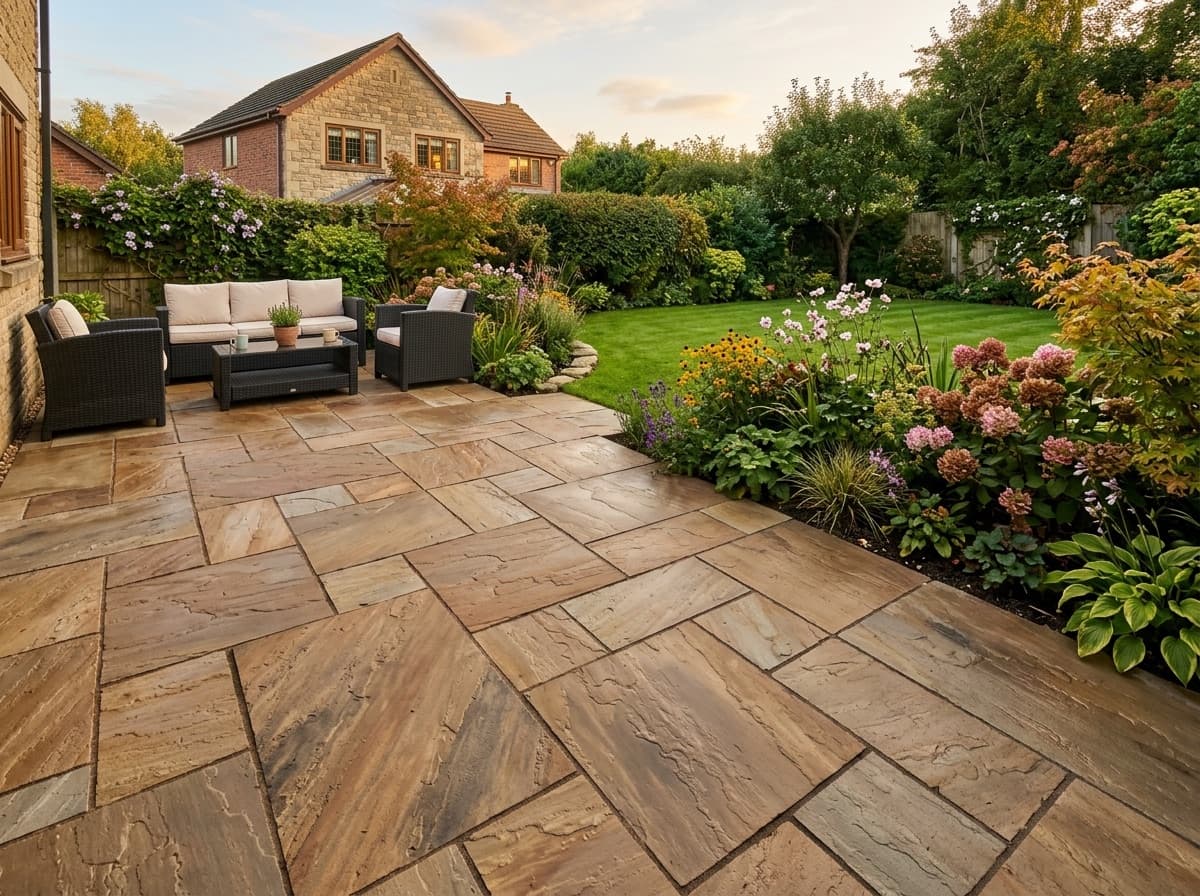
Patios for homes in Blyth
A patio is where the garden actually gets used, so it is worth getting the size and position right before a single slab goes down. We look at where the sun sits through the day, how the space runs off the back door, and whether you want one large area or a couple of smaller ones linked by paths and steps. Then we build it properly — excavated, a compacted base, laid on a full mortar bed rather than dabs, with the falls set so surface water runs away from the house rather than sitting in the middle of the slabs. Sandstone, porcelain, and matching steps, paths and edging so the whole thing reads as one piece of work.
Working in Blyth
Blyth is a historic village north of Worksop, once an important stop on the Great North Road, and it has a conservation area covering much of its centre — a broad green, period stone and brick properties, and the Norman priory church. Material choice genuinely matters in a setting like this: natural Indian sandstone, muted tones and stone walling matched to what is already there sit properly against these frontages, whereas a bright modern block paving pattern would read as out of place against the historic streetscape. Mature boundary walls are a feature through the village and are usually repairable, and rebuilding a section in matched stone with the original coping detail is what keeps a frontage looking as it should.
What's included
- Positioned around sun, access and how you use the space
- Laid on a full mortar bed, not spot dabs
- Falls set to run water away from the property
- Matching steps, paths and edging