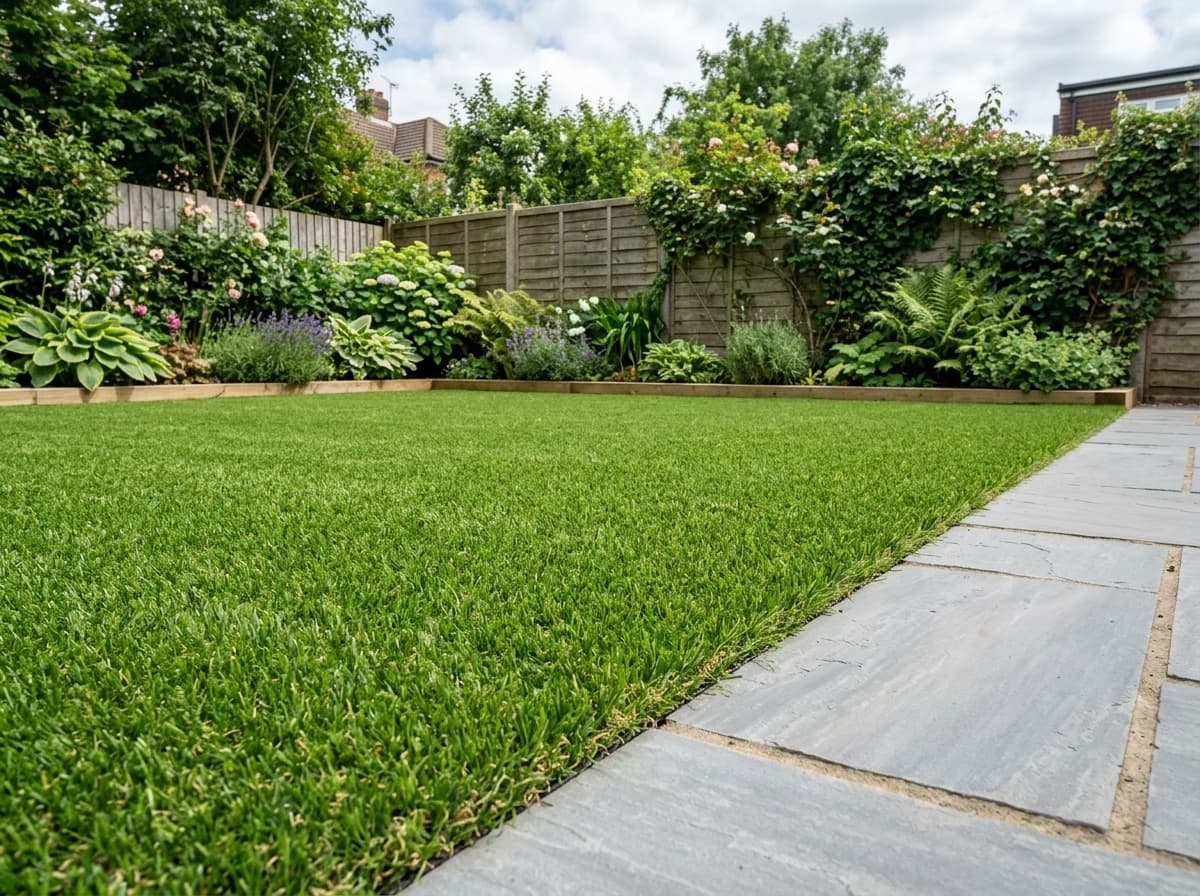
Artificial Grass for homes in Blyth
Artificial grass only looks convincing if the ground underneath is right, and that is where most of the work actually is. We lift the old lawn, excavate, and build a compacted, free-draining base so water goes away rather than sitting under the surface, then lay a weed membrane, roll the grass out and let it settle before cutting it in. Joints are glued on tape and the pile direction matched across them so the seam disappears rather than showing as a line down the lawn, and the perimeter is fixed and trimmed tight to the paving, walls and borders. There is a real difference between grass specifications in pile height, density and colour tone, so we will get samples in front of you first. Once it is down, it stays the same shape all year — no mowing, no bare muddy patches through the winter, and it takes being walked on constantly by kids and dogs.
Working in Blyth
Blyth is a historic village north of Worksop, once an important stop on the Great North Road, and it has a conservation area covering much of its centre — a broad green, period stone and brick properties, and the Norman priory church. Material choice genuinely matters in a setting like this: natural Indian sandstone, muted tones and stone walling matched to what is already there sit properly against these frontages, whereas a bright modern block paving pattern would read as out of place against the historic streetscape. Mature boundary walls are a feature through the village and are usually repairable, and rebuilding a section in matched stone with the original coping detail is what keeps a frontage looking as it should.
What's included
- Excavated, compacted, free-draining base
- Weed membrane and secured perimeter
- Glued joints with matched pile direction
- Samples shown before anything is ordered